Origin Engineering
Origin of Goods and FTAs
Preferential origin creates value only when the rule set, supplier evidence, BOM logic and commercial use of the claim are all controlled together.
Origin is a commercial position, not a checkbox
A preferential claim only helps if the business can defend the rule, the evidence chain and the operating model behind it.
Origin work becomes fragile when it is treated as a one-time customs statement rather than a controlled position supported by product structure, supplier declarations, manufacturing logic, cumulation analysis and documentary retention. The issue is rarely the wording of the rule alone. It is whether the business can explain how the claim was reached, who owns the evidence and how the conclusion is refreshed when the supply chain changes.
CSA Nexus therefore approaches origin as part of a wider governance problem. The mandate often starts with a customs question, but it quickly touches BOM traceability, sourcing changes, corridor design, commercial commitments and the audit posture needed once a claim is used repeatedly or challenged later.

Preference becomes fragile when evidence and sourcing drift apart.
Supplier declarations, BOM logic and corridor assumptions often move at different speeds, which is why origin needs a controlled refresh cycle rather than a one-off answer.
Core workstreams
The aim is to turn origin from a recurring source of doubt into a decision-grade position that can be used, monitored and defended.
Rule and product analysis
Review of applicable origin rules, tariff-shift or value-content tests, cumulation logic and the product structure needed to assess whether the claim is actually supportable.
Supplier and BOM evidence
Design of the evidence pack linking supplier declarations, sourcing information, BOM logic and refresh discipline so the claim does not depend on informal assumptions.
Operating use of the claim
Guidance on when preference should be used, how proof is retained and how customs, sales, procurement and finance stay aligned once the claim becomes part of repeated trade activity.
Origin governance matrix
The diagrams already explain the logic visually; this matrix makes the operating and commercial implications more explicit for the reader.
| Origin layer | Typical weakness | Commercial and operating consequence |
|---|---|---|
| Rule interpretation | The agreement exists, but the business has not translated the rule into product-family logic, cumulation assumptions or usable decision criteria. | Preference becomes inconsistent, margin assumptions become fragile and the same product line is treated differently across shipments or sites. |
| Supplier evidence and LTSD logic | Supplier declarations are incomplete, outdated or disconnected from the BOM and sourcing facts that actually support the claim. | The claim may still be used commercially, but the evidence pack will be weaker than the corridor and customer commitments that now depend on it. |
| BOM traceability and refresh cycle | Sourcing changes, substitutions or manufacturing updates do not trigger a structured refresh of the origin answer. | What once looked defensible can quietly become unsafe to use, creating later rework, duty exposure and management friction. |
| Operating use of preference | Sales, customs, procurement and finance do not share one clear rule for when preference should be used, withheld or escalated. | The business loses the economic upside of preference where it is valid and increases the risk of challenge where it is not. |

Supplier evidence and BOM logic have to survive real supply-chain pressure.
The visual now anchors origin work in repeatable assembly logic, component handling and the traceability questions that sit behind a defendable claim.
Preference claims need institutional discipline, not spreadsheet optimism.
The diagrams remain on the page because they are useful, but the page now keeps origin visibly tied to live manufacturing and sourcing reality.
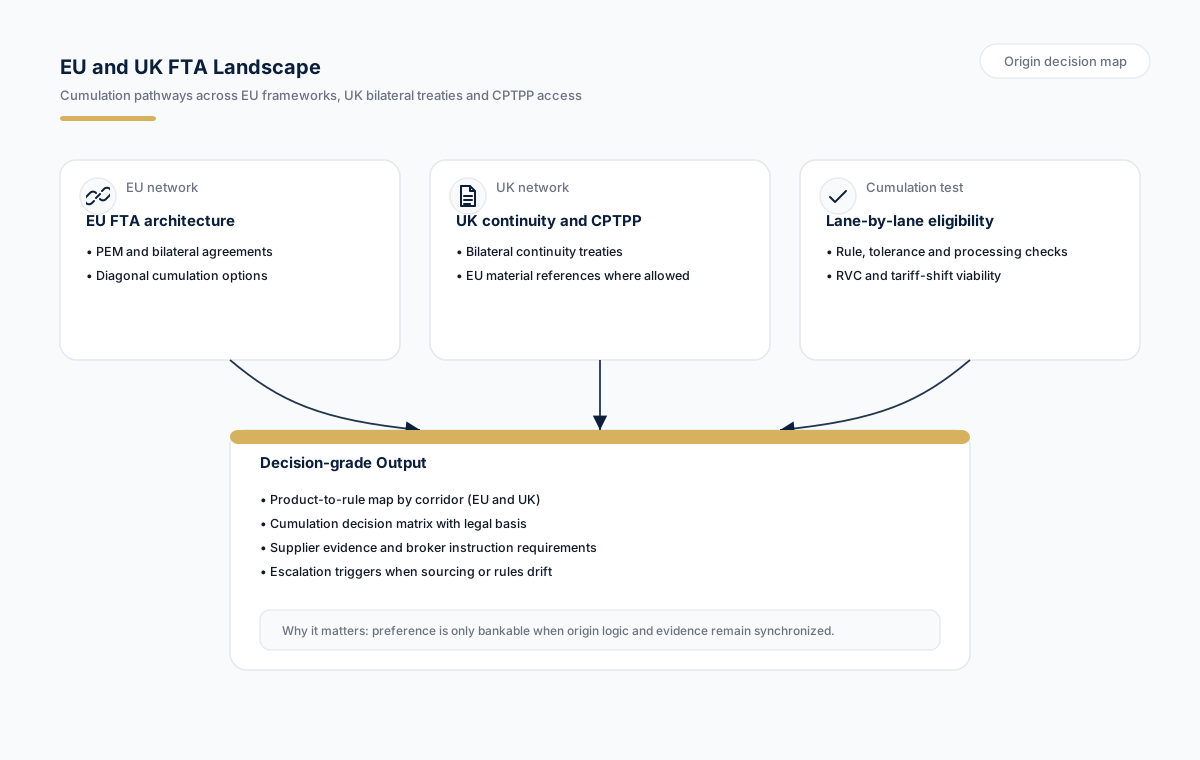
The commercial question is rarely just whether a rule exists.
The real issue is whether the business can connect the relevant agreement, the product structure and the live corridor pattern into a claim it can still defend later.
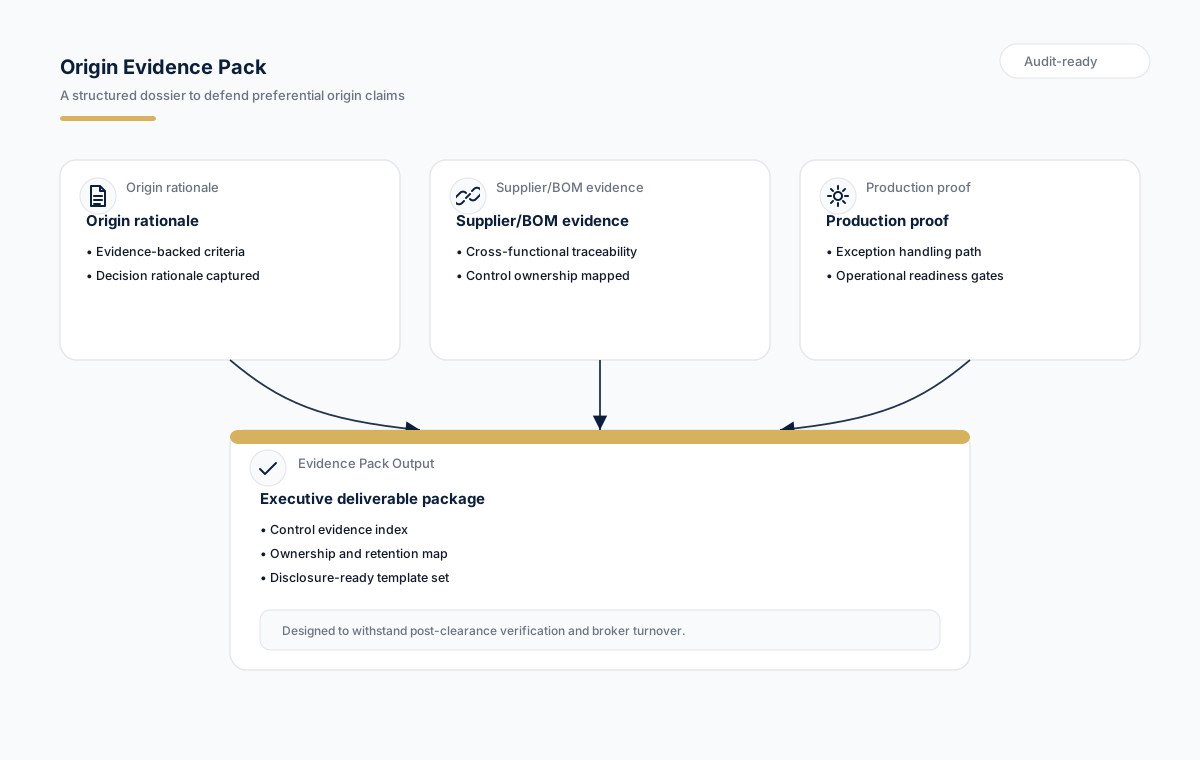
Origin governance is an evidence discipline as much as a rule-reading exercise.
The site should show supplier declarations, BOM logic, refresh cadence and proof retention as a visible part of the service rather than an implied afterthought.
EU-UK and corridor-sensitive implications
The EU-UK environment remains a practical origin challenge because the customs route, supplier base, VAT treatment and documentary expectations often evolve faster than the origin model behind them. Businesses may continue using assumptions that made sense at one stage of the corridor but no longer fit the current sourcing or commercial pattern.
That is where disciplined origin work adds value. It helps prevent preference from becoming a margin assumption that no one can evidence cleanly once a broker, customs authority or internal reviewer asks for the full supporting record.
Why the governance lens matters
Origin disputes are rarely just legal disputes. They create rework in procurement, sales, customs operations and management reporting. A weak origin file can also distort pricing, client commitments and the perceived reliability of the broader trade function. The better model creates a controlled answer that survives changes in staff, sourcing and corridor pressure.
This is why we position origin as engineering plus governance: the rule test matters, but so do the refresh cycle, evidence ownership and escalation thresholds when the claim is no longer safe to use automatically.
Outcome 1
A clearer rule position for the relevant product families and FTAs actually used by the business.
Outcome 2
Supplier evidence and BOM support aligned to the claim instead of sitting in disconnected folders.
Outcome 3
Stronger proof retention and refresh logic where sourcing or product composition changes over time.
Outcome 4
Better coordination between customs, procurement, finance and commercial teams using the origin position.
Need a decision-grade origin position rather than a fragile preference assumption?
We help connect the rule analysis, supplier evidence and operating use of the claim so the commercial benefit remains defensible over time.
Commercial value of origin discipline
A defendable preferential position can reduce landed cost, support pricing and make UK-EU trade flows more sustainable. A weak origin position usually becomes visible only after margin has already been assumed.
What stronger origin governance changes
It gives the business clearer use and non-use rules for claims, better supplier evidence discipline and a stronger link between sourcing changes, BOM facts and the live corridor model.